
Lisheng Apparel’s washed-effect T-shirt listing contains a 230g weight entry. Before using it in an RFQ comparison, ask whether it describes one garment, a packed unit or another defined reference, and identify the size and included items. Do not read that value as 230 GSM: a weight in grams and fabric mass per square metre are different references. Keep the supplier’s explanation beside the offered product and size.
Treat 230g as an entry that needs a defined scope
Send the exact washed-effect T-shirt product link and point to the weight entry you need clarified. Ask the supplier what unit or item was weighed, which product version it describes and whether the figure is a nominal catalogue reference or another stated basis. Keep the answer connected to the offered garment rather than applying it to every T-shirt in the catalogue.
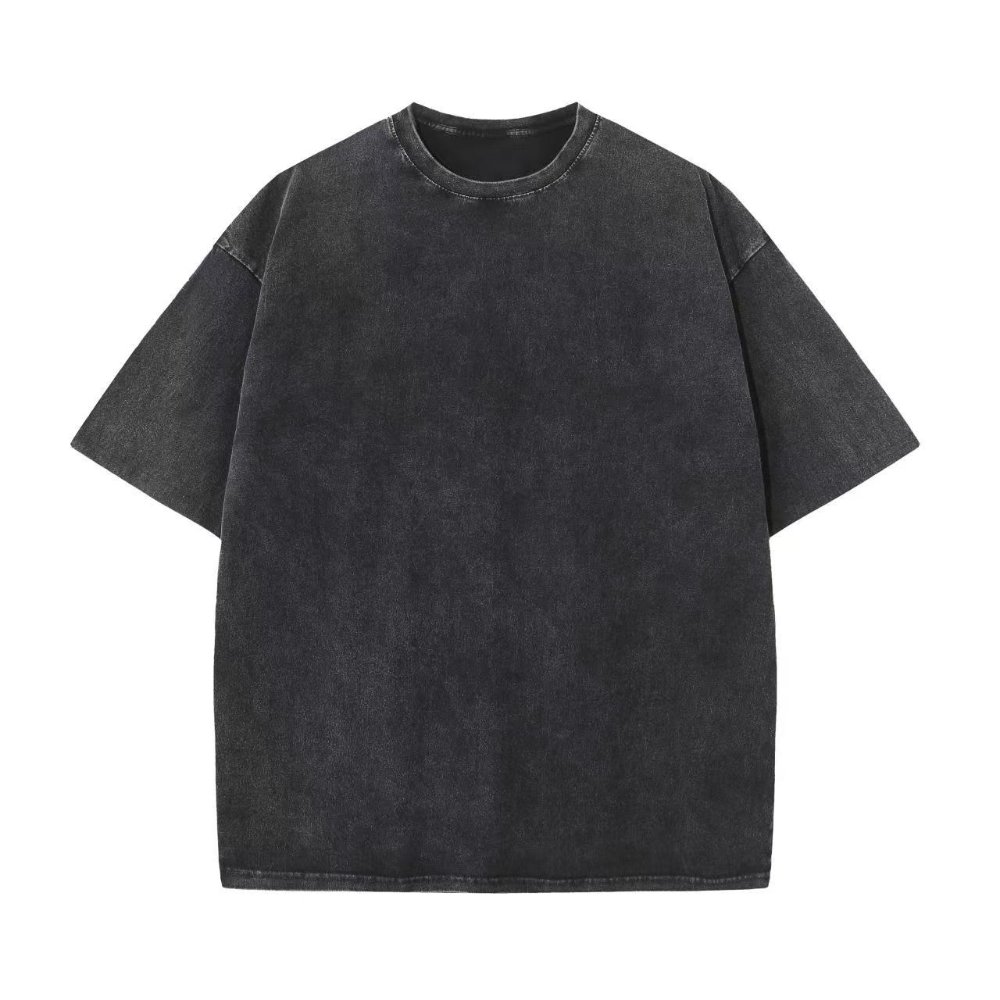
The official photograph shows a dark short-sleeve tee with a washed-looking appearance. It helps identify the product family, but it cannot establish its mass. Do not use the apparent fabric thickness, garment outline or colour to independently confirm the listed value or turn it into a quality assessment.
Separate garment weight from fabric GSM
A garment weight states the mass of the defined item being discussed. Fabric GSM expresses mass per square metre of fabric. The catalogue’s entry in grams does not provide the fabric area and other information needed to interpret it as an areal fabric measurement. Ask for a separately identified fabric GSM reference if the purchase requires one.
Keep the two values under different headings in the buying record. A supplier may answer a garment-weight question and a fabric-weight question in the same message, but they should not be copied into one interchangeable field. Request the relevant offered fabric or garment reference beside each answer so another person can understand what was actually stated.
Weight reference | Question to clarify | Supplier information requested
Catalogue 230g | What item and unit does it describe? | Defined weight basis for the offered version
Garment only | Which size and included garment parts? | Sample or size identifier and item scope
Packed unit | Is packaging included? | Separate description of included packaging
Fabric GSM | Is an areal fabric reference required? | Separately named fabric value and unit
Order comparison | Are the offers using the same basis? | Aligned item, size and packaging references
Identify the garment size behind the reference
Ask the supplier which size code the weight information applies to. If the buyer is comparing a range of offered sizes, request an explanation of how the supplier represents that range. Do not assume that a single figure describes every size in the same way or invent separate weights that the supplier has not provided.
Connect the answer to the same garment version and appearance reference used in the quote. If the supplier offers an alternative fabric or another construction, ask whether the earlier weight reference still applies. A common product name alone does not establish that two proposals use an identical weight basis.
State whether packaging belongs in the figure
Ask whether the returned value concerns the garment by itself or includes an individual bag, tag or another packing item. The point is to define the reference, not to assume that packaging is present. If the purchase needs both garment-only and packed-unit information, request them as two separately named responses.
The listing also contains a general dimensions entry. Ask what those dimensions describe before using them alongside the weight. Unexplained dimensions do not establish a garment measurement, a shipping-package specification or a reason to reinterpret the weight. Keep each field under its own confirmed description instead of filling gaps by inference.
• Ask what item and quantity the catalogue weight represents.
• Identify the offered size and garment version.
• Separate garment-only and packaging-inclusive references.
• Request fabric GSM under its own clearly named field if needed.
Compare offers using the same stated basis
Before comparing figures from two supplier replies, check that they concern the same kind of reference. One response may describe a garment-only value while another includes packing. Ask for clarification where those descriptions differ. A numerical comparison is only useful when the buyer understands the item and condition each number represents.
If the buyer needs a confirmed sample value or an agreed tolerance, request that information explicitly. Do not invent a tolerance from the catalogue entry or treat its presentation as a tested result. Weight clarification also does not independently verify fibre composition, wash treatment, colourfastness or wear performance; keep any such requirements separate.
Send a weight-basis clarification enquiry
A practical request can read: For the linked washed-effect T-shirt, please explain the listed 230g weight basis. Identify the item or unit, size code and any packaging included. If fabric GSM is available for the offered version, please provide it separately with its unit and fabric reference. Please also clarify what the general dimensions entry describes.
Keep the supplier’s confirmed description beside the returned figure in the final buying record. If the size, garment version or packing arrangement changes, ask which references need updating before using the earlier value. This turns an ambiguous catalogue entry into a usable procurement reference without inventing a net weight, a fabric specification or a performance guarantee.
Frequently asked questions
Does 230g automatically mean 230 GSM?
No. Grams describe a mass; GSM describes fabric mass per square metre. Request separately identified references.
Can the figure be assumed to exclude packaging?
Ask the supplier what is included. Keep garment-only and packed-unit information separately named if both are needed.
Does one catalogue value confirm every size?
Request the size and version behind the reference and ask how the supplier represents other offered sizes.
Can the product photograph verify the weight?
The image identifies the appearance. Obtain the weight explanation or any required sample information separately from the supplier.
Product and contact references
Product reference: https://lishengapparel.com/product/men-8217-s-washed-effect-short-sleeve-t-shirt/
Related apparel: https://lishengapparel.com/products/
Contact Lisheng Apparel: https://lishengapparel.com/contact/
Lisheng Apparel blog: https://lishengapparel.com/blog/